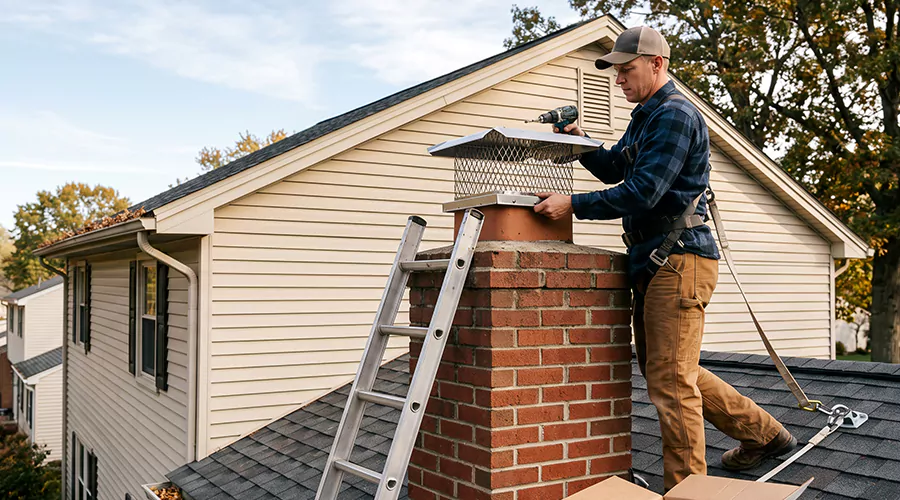
How to Choose the Right Chimney Cap
Select the right chimney cap by considering chimney size, material, venting needs, weather protection, spark protection, and compatibility with your chimney design.




Based on 500+ Reviews

Proudly American
Owned & Operated

Choosing the right chimney cap is an important part of protecting a chimney from water damage, debris buildup, animal entry, and weather exposure. Although chimney caps are relatively small components, selecting the wrong size, material, or design can reduce their effectiveness and may create additional chimney problems.
A properly selected chimney cap helps protect the chimney opening while allowing smoke and gases to exit safely. The best chimney cap depends on factors such as chimney type, flue design, material durability, weather conditions, and installation requirements.
Understanding the different options available can help homeowners choose a chimney cap that provides long-term protection for their fireplace and chimney system.
A chimney cap acts as a protective barrier over the chimney opening.
The right chimney cap helps prevent:
A poorly fitted or low-quality chimney cap may fail to provide proper protection.
The correct chimney cap should:
Before choosing a chimney cap, it is important to understand what type of chimney system you have.
Common chimney types include:
The chimney design determines what type of cap will work properly.
One of the first decisions is choosing between a single-flue and multi-flue chimney cap.
| Chimney Type | Recommended Cap Type |
|---|---|
| One chimney opening | Single-flue cap |
| Multiple flue openings | Multi-flue cap |
| Unique chimney design | Custom chimney cap |
Single-flue caps are designed for chimneys with one flue opening.
They are usually:
They are commonly used on standard residential chimneys.
Multi-flue caps cover multiple openings at the top of the chimney.
They may cost more because they require:
They are useful for chimneys with multiple fireplaces or ventilation systems.
The material of a chimney cap affects durability, appearance, maintenance, and cost.
Common chimney cap materials include:
Stainless steel is one of the most popular chimney cap materials.
Benefits include:
Stainless steel caps are a good choice for homeowners looking for durability and reliability.
Galvanized steel caps are usually a more affordable option.
Benefits include:
However, they may be more likely to develop rust over time compared with stainless steel or copper options.
Copper chimney caps are a premium option known for appearance and durability.
Benefits include:
Copper caps usually have a higher initial cost but can provide long-term value.
Aluminum caps are lightweight and resistant to rust.
Benefits include:
However, aluminum may not be as strong as stainless steel in some conditions.
Proper sizing is one of the most important factors when choosing a chimney cap.
A chimney cap that is too small may:
A chimney cap that is too large may:
Before purchasing a chimney cap, measure:
A proper fit ensures better protection and performance.
Many chimney caps include mesh screens that help block debris and animals.
The screen should:
A screen that is too small may restrict airflow, while a screen that is too large may allow pests or debris to enter.
The right balance depends on the chimney system and local conditions.
Climate plays an important role when choosing chimney cap materials.
Areas with:
may require more durable chimney cap materials.
Stainless steel and copper are often preferred for areas where corrosion resistance is important.
A chimney cap should be securely attached to prevent movement or damage.
Common attachment methods include:
The best attachment method depends on the chimney design.
A loose chimney cap can:
Some chimneys can use standard caps, while others require custom designs.
Suitable for:
Benefits:
Needed for:
Custom caps can provide a better fit and improved appearance.
Some chimney caps include spark arrestor screens.
These screens help reduce the chance of sparks or burning embers escaping from the chimney.
This feature may be beneficial for:
The cheapest chimney cap may not always provide the best value.
Low-quality caps may:
Important factors to consider include:
A quality chimney cap can help prevent expensive chimney repairs.
A chimney cap may need replacement if you notice:
A damaged chimney cap may no longer protect the chimney effectively.
When choosing a chimney cap, avoid these common mistakes:
An incorrect fit reduces protection and performance.
Low-quality materials may deteriorate quickly.
Different chimney systems require different cap designs.
A chimney cap does not fix existing problems such as:
These issues should be repaired separately.
The cost of a chimney cap depends on:
| Chimney Cap Type | Average Cost Range |
|---|---|
| Galvanized steel | $150–$300 |
| Stainless steel | $300–$700 |
| Copper | $700–$1,500+ |
| Custom designs | $500–$2,000+ |
A higher-quality chimney cap may cost more initially but can provide better long-term protection.
Some homeowners install basic chimney caps themselves, but proper installation requires accurate measurements and safe access.
DIY challenges include:
Professional installation may be recommended for:
Regular maintenance helps extend chimney cap life.
Helpful steps include:
A properly maintained chimney cap can provide years of protection.
Choosing the right chimney cap requires considering chimney type, size, material, screen design, weather conditions, and installation method. A properly fitted chimney cap helps prevent water entry, animal intrusion, debris buildup, and moisture-related chimney damage. Stainless steel, copper, galvanized steel, and aluminum options each provide different benefits depending on durability needs and budget. Investing in the correct chimney cap is a simple but effective way to protect the chimney system, reduce maintenance problems, and extend the life of the fireplace structure.
The correct size depends on the chimney opening, flue dimensions, and chimney design.
Stainless steel is a popular choice because it provides durability, corrosion resistance, and low maintenance.
No. Chimney caps vary by size, material, design, and chimney type.
A chimney cap helps prevent water from entering through the chimney opening, but it does not repair leaks caused by flashing, crowns, or masonry damage.
The lifespan depends on the material. Stainless steel and copper caps generally last longer than basic metal options.
A custom cap may be better for unusual chimney designs, multiple flues, or homeowners who need a precise fit.
Select the right chimney cap by considering chimney size, material, venting needs, weather protection, spark protection, and compatibility with your chimney design.
